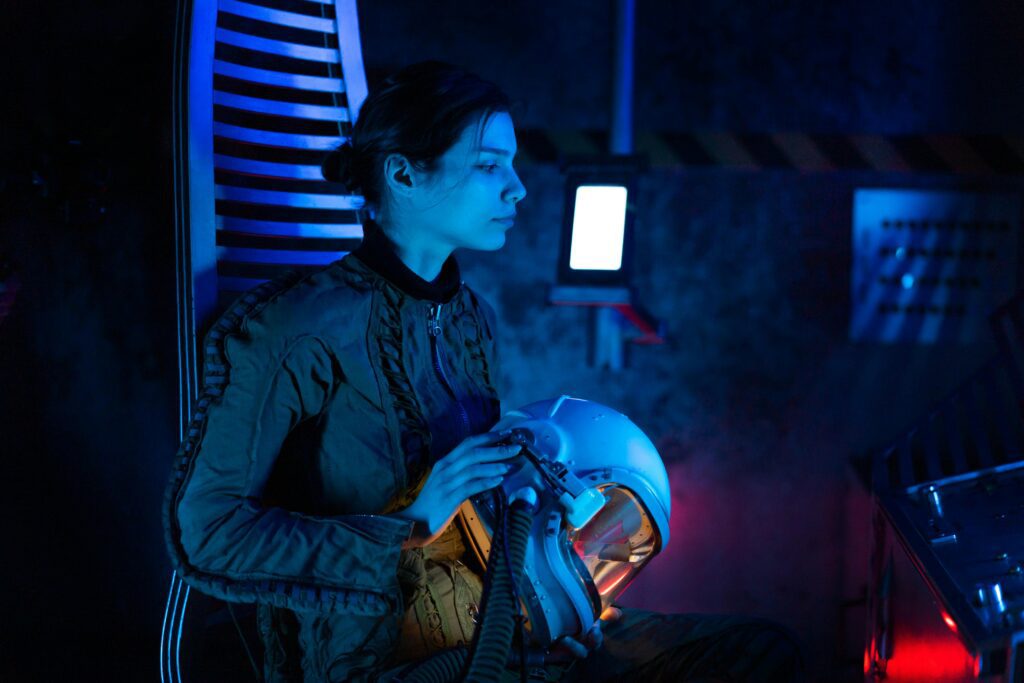
Space opera is one of the most exciting and enduring subgenres of science fiction. It is known for epic, sweeping adventures set in expansive galaxies that look nothing like our own.
At its heart, space opera features high-stakes conflicts, bold heroes and villains, and vast, imaginative settings filled with spaceships, alien worlds, and interstellar empires. Space opera stories thrive on drama, action, and spectacle.
The classic space opera definition centers on galaxy-spanning adventures with daring characters facing enormous odds. If you’ve ever watched Star Wars, been mesmerized by Dune, or followed the voyages of the Starship Enterprise, you’ve experienced space opera in action.
 Ready to start your own saga? Join AutoCrit’s Secrets of Space Opera Workshop with storyteller Casey Jones.
Space Opera Definition and Meaning
Space opera is science fiction at its most sweeping and dramatic. Instead of focusing narrowly on scientific accuracy, it prioritizes grand storytelling, emotional stakes, and imaginative spectacle.
Unlike hard science fiction, which prizes scientific accuracy, space opera plays fast and loose with physics and ‘reality.’ Faster-than-light travel, telepathic alien species, and planet-destroying superweapons are all fair game. The emphasis is not on the technical details of how these things work but on the drama they create.
Space Opera History and Origins
The phrase “space opera” wasn’t always a compliment. Borrowed from soap opera, the term was originally meant to mock pulp science fiction stories full of melodrama and endless spaceship battles.
In the 1940s, author Wilson Tucker popularized the insult, describing them as “hacky, grinding, stinking, outworn spaceship yarn”.
But despite the critics, readers adored these adventures. Pulps like Amazing Stories and Weird Tales launched serialized heroes such as Buck Rogers and Flash Gordon. Over time, the genre matured—going from “cheap thrills” to mainstream respectability with epics like Frank Herbert’s Dune.
Today, space opera stands proud as one of science fiction’s defining forms, celebrated instead of mocked, and now synonymous with action-packed, universe-spanning tales.
The Core Elements of Space Opera: The Rule of Three
All great space operas share a recognizable recipe, sometimes called the Rule of Three.
- Vast, Interstellar Settings: Multiple worlds, sprawling civilizations, and galactic empires create the canvas. The adventure often stretches across solar systems—or even entire galaxies. The bigger the universe, the higher the stakes!
- Large-Scale Conflict & High Stakes: Wars, rebellions, dynasties in crisis, and alien invasions drive these conflicts. These conflicts determine the fate of entire civilizations. Galactic empires rise and fall. Epic space battles, faster-than-light chases, and cosmic showdowns keep readers on the edge of their seats. Military handling of conflict, political intrigue, and desperate gambits come into play.
- Dynamic, Emotionally Driven Characters: At the heart of every space opera stands a memorable cast—brash heroes, ruthless villains, and complex sidekicks. From bold heroes to complex antiheroes, the human (or alien) drama anchors the cosmic spectacle. Their personal dreams and dramatic choices shape the story as much as the vast backdrop or explosive action. Family betrayals, rivalries, and love stories carry as much weight as space battles.
FAQ: What makes something a space opera instead of just science fiction? The Rule of Three! Without a grand setting, huge conflict, and character drama—you’ve got science fiction, but not true space opera
Classic and Modern Space Opera Examples
Star Wars is arguably one of the most globally recognized space operas out there. But space opera didn’t start with lightsabers, nor did it stop there.
Classic space opera examples go back to the pulpy days:
- Edgar Rice Burroughs’s A Princess of Mars
- George Griffith’s The Outlaws of the Air
- Series like Flash Gordon, Buck Rogers, and John W. Campbell’s The Mightiest Machine shaped the early image of space opera.
E.E. “Doc” Smith’s Lensman series and Edmond Hamilton’s Crashing Suns are foundational, setting the stage for generation-spanning sagas and galaxy-shaking stakes.
FAQ: Is Dune a space opera? Yes, though it’s more cerebral. Herbert’s work combines galactic empires and prophecy with ecological and political allegory.
Modern space opera includes heavy hitters as well.
- Lois McMaster Bujold’s Vorkosigan Saga
- Alastair Reynolds’ Revelation Space
- Ann Leckie’s Ancillary Justice
- Becky Chambers’ Wayfarers series
- Arkady Martine’s Teixcalaan novels push the genre into new territory, adding diversity and sophisticated worldbuilding.
- Even Charles Stross, with series like The Eschaton Sequence, takes space opera further with fresh ideas.
From pulpy adventures to nuanced, character-driven sagas, space opera has proven itself one of the most adaptable and enduring forms of science fiction.
Space Opera in Film and Television
Space Opera is as beautiful and enduring on the screen as it is on the page. Throughout the years, we’ve seen space opera brought to just about every living room and cinema.
- Star Wars: George Lucas’s saga blends mythic adventure, epic battles, and unforgettable characters. Star Wars mainstreamed “the science fiction equivalent of a horse opera,” with galaxy-wide conflicts, rebel heroes, and a struggle for freedom that feels as grand as any epic.
- Star Trek: This TV and film juggernaut has a different flavor. Star Trek’s “wagon train to the stars” approach explores utopian ideals, diplomacy, and philosophical questions—alongside space battles and weird new worlds. Its vision of diverse crews, alien races, and future politics shaped science fiction culture.
- Dune: Adapted for the big and small screen, “Dune” delivers sprawling galactic empires, ecological drama, and political intrigue. Whereas Star Wars is swashbuckling, “Dune” leans cerebral, navigating power, resource scarcity, and prophecy in one sweeping saga.
These stories stand out for more than their spaceships. Each offers a distinct take: action-packed blockbuster, philosophical exploration, or visionary allegory. Together, they show just how far space opera can go—whether you prefer lightsabers, warp drives, or sandworms.
👉 Related Reading: Setting of a Story: Creative Decisions For Immersive Storytelling – essential for balancing galaxy-sized plots and locations.
How to Write Space Opera: Tips for Epic Worldbuilding and Adventure
So, how do you actually write a space opera? The key is going to be to think big! Here are some guiding principals to get you started:
- Build a Universe Worth Exploring Start with an interstellar setting that feels alive. Populate it with planets, empires, alien species, and clashing cultures. Don’t worry if the science isn’t airtight—this isn’t hard sci-fi. Faster-than-light drives, ancient superweapons, or psychic alien species can all work, as long as they serve your story.
- Anchor Your Plot With High Stakes Conflict A good space opera thrives on large-scale tension: wars between empires, rebellions against tyranny, or ancient threats resurfacing. Conflict gives your story momentum, and it also defines the choices your characters must make. Keep the “Rule of Three” in mind: a vast setting, a high-stakes conflict, and emotionally driven characters.
- Give Your Characters Something to Lose Behind every galaxy-spanning saga are characters readers care about. Heroes, villains, mentors, sidekicks—each should have clear desires and fears. The more personal their stakes, the more readers will care about the battles raging across the stars. Big emotions drive big adventures.
- Start Fast, Reveal Slowly Avoid bogging readers down with three chapters of exposition. Instead, drop them into action and let the details of your universe unfold naturally through dialogue, conflict, and discovery.
FAQ: Do I need to explain all my technology? No. Don’t let the tech overwhelm the tale! Readers don’t need blueprints for warp drives. What matters is how your characters use technology in pursuit of their goals.
Diversity, Allegory, and Social Themes in Modern Space Opera
Today’s space operas are more than just starship shootouts—they’re mirrors for our world. Modern space opera stories often grapple with themes like imperialism, class, gender roles, and cultural conflict, using alien empires and interplanetary politics as allegories for real societies.
Authors such as Ann Leckie and Arkady Martine weave questions of identity, loyalty, and social justice into their worlds. Diverse characters—across race, gender, and sexuality—are front and center, reflecting a broader spectrum of human experience. Meanwhile, works like Becky Chambers’ Wayfarers highlight community and inclusivity, moving past the old “one-size-fits-all” hero archetype.
International voices are reshaping the genre as well, infusing space opera with mythologies, histories, and cultural perspectives beyond the traditional Anglo-American lens. The result? Fresher voices, richer settings, and unexpected stories that expand the boundaries of the genre.
It’s not just about fighting evil space empires—it’s about what power means, who gets it, and how societies change across the universe.
👉 Related Reading: How To Weave Themes Into Your Story for maximum impact.
Space Opera Parodies: Humor Among the Stars
Space opera is so grand that it practically begs to be parodied. From Galaxy Quest to Spaceballs, creators have lovingly skewered its tropes: melodramatic villains, planet-destroying weapons, endless space battles.
These works thrive because fans love space opera’s excesses. It’s a reminder that even in the grandest sagas, humor has a place. Studying parody is also useful for writers—it shows which tropes have become clichés, and how you can twist them in fresh ways.
Want to sharpen your storytelling skills even further? Check out the Science Fiction Workshop Bundle (42% off). This comprehensive set of courses and workshops will fuel your imagination and refine your craft.
Final Thoughts: Why Space Opera Endures
Over time, space opera has grown from pulp ridicule to one of the defining forms of science fiction. Its blend of cosmic adventure, human drama, and imaginative freedom ensures it will keep evolving.
Whether you crave the swashbuckling energy of Star Wars, the political allegory of Dune, or the inclusive warmth of Wayfarers, space opera delivers.
Ready to bring your galactic adventure to life? Join the Secrets of Space Opera Workshop and get ready to launch into epic storytelling and adventure!
Want to go all in on everything Science Fiction? For a limited time, you can get the Ultimate Science Fiction Writer’s Bundle for 42% off. This bundle is packed with everything you need to build compelling worlds, craft unforgettable characters, and write a sci-fi novel that will keep readers turning pages. Don’t miss out on your chance to get a massive boost to your writing. The future of your story starts now.