When it comes to writing fiction, one of the best ways to keep your readers on their toes is to play around with the rules. Tropes—those familiar story elements that we know and love—can be comforting, but let’s face it: sometimes they get a little too predictable. That’s where reverse tropes come in!
If you want to stand out in today’s crowded fiction market, you’ll need to shake things up until something fresh falls out. In this blog post, we’re going to dive into reverse tropes: what they are, how to use them, and 17 hilarious examples that will have your readers (and maybe even you) rolling on the floor in disbelief.
Ready to throw a few creative curveballs into your fiction? Let’s go!
What Are Reverse Tropes?
Reverse tropes are the literary equivalent of turning your favorite ice cream flavor upside down and serving it in a taco shell. They take a classic existing trope (a recurring story element that’s been used over and over) and do the opposite. Instead of following the traditional path, you flip it, twist it, or make it so absurd that it becomes fresh and funny.
Think of it as a mash-up of familiar storytelling and creative rebellion. You’ll get a “Hey, I’ve seen that before!” moment, followed by a “Wait, what just happened?” moment. It’s the perfect combination of the old and the new, with the potential for laughs, shocks, or even outright horror in store.
By subverting these expectations, you’re not just entertaining—you’re giving your audience that dopamine hit of pure surprise they’ve been craving. Even if they don’t actively recognize that you’ve played with a certain trope, it’s the new, inexplicably awesome feeling your stories provide that helps build a loyal readership who can’t wait to see what you’ll do next.
How to Use Reverse Tropes in Your Writing
Now, trope reversal isn’t just about being different at every turn—it’s about being smart with your storytelling. You’re taking those established conventions and showing your readers you respect their intelligence enough to give them something fresh, like when that morally ambiguous or evil villain turns out to be the only one trying to save humanity. We’ve been backing the wrong person all along!
Challenging readers’ preconceptions is like a fast-track to their hearts. Everyone loves innovative new takes and surprising turns, and the key to fulfilling that is knowing what kind of expectations are on the table from the beginning. That said, all successful trope reversals need a few fundamental elements to work. Here are a few pointers to guide your approach to inverted tropes:
1. Know the original trope
You can’t reverse a trope if you don’t know it. Familiarize yourself with the classic tropes in your genre. It’s like knowing the rules before you break them. Tropes exist across almost every layer of storytelling, from character archetypes (the outdated “dumb blonde” or overbearing older sister), to story revelations (“They were dead spirits whole time!”), world-building, genre conventions, plot devices and more. Once you know what you’re looking at, you’re in prime position to flip it on its head.
Assume that every character trope you’ve seen a million times can be completely reversed. For example:
The Wise Old Mentor becomes the Young Inexperienced Guide
The Evil Stepmother becomes the Supportive Stepparent
The Damsel in Distress becomes the Male Needing Rescue
The Chosen One becomes the Rejected One
The Dark Lord becomes the Light Lord Gone Bad
… and so on.
Character archetypes and plot devices go hand in hand when you’re crafting your story—so think about how your character reversals can, in turn, subvert prophecies, twist love triangles, or completely reimagine the hero’s journey. Whether it’s played for laughs and comic relief, or invites sheer disgust or “I can’t believe they did that!” shock, readers will gobble it up.
But, as mentioned, it doesn’t stop at character. Try flipping world-building conventions, for example—like the magical academy trope, where yours is instead a regular school where magic is banned. Take everything your reader thinks they know about your genre’s typical settings and flip it. That’s where you’ll start to dig up certified fried gold.
Genre rules are a further fertile ground, ripe for reversals. It’s time to break them—strategically. When you’re reversing tropes, don’t be afraid to smash different genres together. Your romance can end in tragedy, your horror can be hilarious, and your fantasy can be grounded in cold, hard science.
Remember, though, that reversal of genre expectations isn’t just about throwing random elements together. You need to understand what makes each genre tick, then combine them in ways that amplify their strengths. Look at how Pride and Prejudice and Zombies took the literary classic and created a whole new subgenre, or how George R.R. Martin took classic fantasy tropes and turned them into something nobody had seen before. It’s this kind of simple innovation that can take your career as a writer to new heights.
Tear each trope apart, piece by piece, and see if you can figure out what it is that readers take for granted. Once you know, you can start to flip the script. But remember: deconstruction isn’t just about breaking stuff down. You’ve got to rebuild it in a way that makes sense—which takes us to our next point…
2. Introduce strong character motivations
One of your biggest challenges is maintaining reader investment while you’re turning familiar tropes upside down. You need to keep your audience emotionally connected to your characters even as you’re subverting their expectations. Readers should be surprised but satisfied, not confused or alienated.
In fact, reader investment comes down to your ability to make these reversed tropes feel authentic and earned. When you’re building up to a major trope subversion, you need to lay the groundwork carefully. Give your readers subtle hints and breadcrumbs of character development that make the reversal feel like a natural outcome rather than a random twist. Characters should always be understandable, even if they aren’t particularly relatable—and that’s especially true if they’re breaking the mold.
We could, for example, be following a story that features a villain who seems to have it all together; they’re the ultimate adversary, always one step ahead. But once we’re behind enemy lines, we discover the villain is actually a bumbling idiot, surrounded by idiots of a similar caliber, whose hare-brained schemes are always saved at the last minute by a doting, overworked henchman. It’s only when this truth is revealed that the audience can clearly see the signs of quick fixes that were left behind at each deathtrap.
Your audience will thank you for respecting their intelligence while still surprising the hell out of them.
3. Maintain coherent plot integration and logic
Story coherence is your best friend when you’re turning tropes on their head. You need to connect all the dots and make sure your reversal fits naturally within your narrative. Just as with your character development, any effective reversal should feel organic within your story’s world, not forced just for shock value. The most successful reversals feel both surprising and inevitable, like they were meant to be that way all along. Think about cause and effect, character motivations, and world-building elements that support your twist. You aren’t just breaking rules, you’re creating new rules that, in your world, make more sense than the originals.
Also ensure that your choice of reversals help push the story forward and add value to the narrative. Sure, you might introduce a quickly-glimpsed reversal for the sake of a quick joke, but cohesion is still key within the broader scope. If your story is just packed with inverted tropes without any clear purpose, your readers will see right through it.
17 Hilarious Examples of Reverse Tropes in Fiction
Ready to dive into the fun? Here are 17 reverse trope examples for your writing that will make you chuckle and get your creative juices flowing.
1. The Chosen One Who Wasn’t Chosen
Original: A young, unassuming hero discovers they’re the only one who can save the world.
Reverse: The MC isn’t the Chosen One. In fact, they’re rejected—but they damn sure want to be the Chosen One and act like they truly are.
2. The Harmless Villain
Original: The villain is cunning, menacing, and always a step ahead of the hero.
Reverse: This truly harmless villain is constantly messing up. They get stuck in traps, misplace their evil artifacts, and their evil plan is perpetually “in progress.”
3. The Damsel Who Saves Herself, and Everyone Else
Original: The helpless damsel needs rescuing from a daring knight.
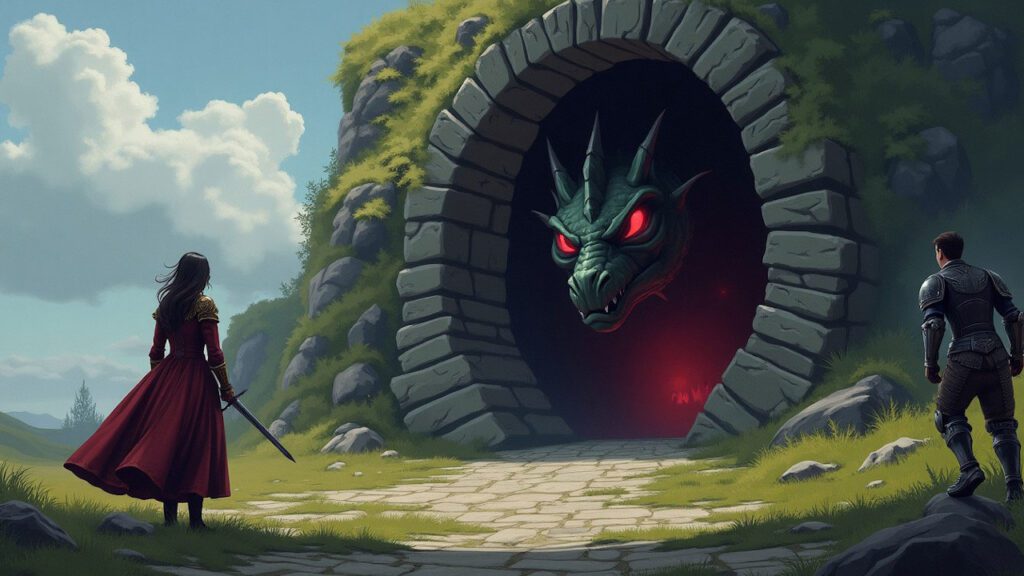
Reverse: The damsel is the one doing the rescuing, slaying monsters, saving the day, and offering the Blood Knight a helpful tip on how to actually fight a dragon.
4. The Hero Who Needs More Help Than He’s Willing to Admit
Original: The hero is strong, self-reliant, and capable of handling anything.
Reverse: The hero constantly screws things up, calls for backup, or even gets hopelessly lost. “Hey, you, do you have a map? I’ve a boss battle to get to.”
5. The Evil Overlord Who’s Just a Really Nice Guy
Original: The evil overlord is terrifying and commands armies of minions.
Reverse: The evil overlord is actually super nice. He just wants to take over the world so everyone can get a free lunch and a day off. His minions are just there for the employment perks and, honestly, he’d love nothing more than to sit down and chat with the heroes.
6. The Secret Identity That’s Not So Secret
Original: The hero has a secret identity that no one can figure out.
Reverse: The hero’s secret identity is ridiculously obvious. Everyone knows, including the villain. But for some reason, no one ever mentions it. They just let it slide.
7. The “Maid Who’s Actually a Princess” Who Doesn’t Want the Crown
Original: The maid is secretly of royal blood, but doesn’t realize it.
Reverse: The maid knows she’s a princess, but she’d rather be scrubbing floors and drinking wine in the tavern. She’s only interested in love, not thrones, and she’s making the hero work hard to win her heart—despite her title.
8. The Dystopian Society Where Everything Is Perfect (Until It’s Not)
Original: A dystopian society where everything is bleak, oppressive, and totally broken.
Reverse: The society is perfect—everyone has what they need, all the robots are friendly, and every day is “bring your pet to work” day. But there’s still something oddly sinister happening beneath the surface.
9. The Hero Who Only Cares About Their Pet
Original: The hero is focused on saving the world, but might have a pet for sentimental reasons.
Reverse: The hero’s primary goal? To save their pet. World domination, magic, and world-saving plans come second to finding their cat or dog. Everything is for the pet.
10. Hate at First Sight
Original: Our lovestruck couple fall head over heels at their first “meet cute.”
Reverse: The couple can’t stand each other after first impressions, then gradually come together through a series of increasingly ridiculous misunderstandings.
11. The Hero Who’s Always Late to Save the Day
Original: The hero always arrives just in time to save the day.
Reverse: The hero is never on time. They show up 15 minutes too late to every battle and spend half their time apologizing for being behind schedule.
12. The ‘Wise Old Mentor’ Who’s Actually Just A Toddler
Original: The wise old mentor imparts invaluable wisdom to the hero.
Reverse: The “wise” mentor is actually a toddler who only knows how to throw tantrums, demand snacks, and accidentally disrupt everything. But hey, they do have some extremely useful advice in between the comic relief and insane dialogue lines.
13. The Epic Quest That’s Completely Unnecessary
Original: The hero embarks on an epic quest to save the world.
Reverse: The hero embarks on an epic quest to find something they don’t even need. Maybe it’s a lost sock or the perfect cup of coffee. But it’s treated with the same level of seriousness.
14. The Forbidden Love That’s Totally Allowed
Original: Two people from different backgrounds can’t be together because of a totally forbidden romance.
Reverse: Their love is completely allowed, but they still spend the entire story sneaking around like it’s forbidden for no real reason. The drama is all in their heads.
15. The Dragon Who’s Allergic to Gold
Original: The dragon ruthlessly protects its gigantic horde of gold within its lair.
Reverse: This dragon loves gold, but can’t go anywhere near it due to allergies. In fact, her last accidental sneezing fit destroyed an entire kingdom.
16. The Superpower That’s Super Useless
Original: The hero has an incredible power that saves the day.
Reverse: The hero’s superpower is incredibly useless. Maybe they can turn invisible, but only when no one’s around to see it. They’re a walking contradiction, and it’s hilarious.
17. The B Team
Original: This crack team of soldiers and crime-solvers will get the job done, whatever the cost.
Reverse: This team of absolute misfits will crack you up, as they constantly stumble into dangerous scenarios, solve the wrong crimes, and yet somehow still come out on top. Surrounded by idiots, not a single one has the self-awareness to think of themselves as anything other than unstoppable.
In Conclusion
Crafting killer reverse tropes starts with recognizing the DNA of classic storylines. You need to dive deep into your favorite genres and make a list of the most common patterns you see. Look for that “oh, here we go again” moment in books and movies—the predictable existing trope that makes you roll your eyes. That’s your goldmine right there. Once you spot these patterns, you’ve got the raw material to flip them upside down.
Go left when your audience is looking right. The biggest wins come from zigging when everyone else is zagging.
If you need a hand getting started with certain genre tropes, take a look at our guide to some defining action-adventure tropes, sci-fi tropes, and thriller tropes right here on the AutoCrit blog.
Further into your creative process, you’ll want to experiment with multiple angles and more subtle shifts on smaller tropes. Maybe your damsel in distress becomes the dragon’s financial advisor, your evil stepmother turns out to be protecting the kingdom from the “innocent” princess, or your impoverished patrician is actually still loaded with family wealth… he just refuses to spend it. The possibilities are endless, and that’s where your creativity can really shine.
Your job as a writer isn’t to follow the crowd. It’s to punch through the noise and deliver something that makes readers stop in their tracks. The best part? You don’t need anyone’s permission to shake things up. You’ve got the tools right here. Now it’s on you to execute.
Take one of these reverse tropes right now—not next week, not next month, RIGHT NOW—and start writing. Your readers are waiting for something new. Go give it to them.
Uncover Trope Possibilities with AutoCrit
Did you know that in just a few minutes, you could have a complete list of tropes you’ve employed in your novels? Thanks to AutoCrit’s Story Analyzer and Backwards Blueprint tools, it only takes a few clicks.
And once you know which tropes you’ve engaged… you can start figuring out how to take those classic expectations and turn them on their head for something new.
Whether that’s within the story you currently have, or for an entirely new one, is up to you. Regardless, the power is in your hands! If you’re ready to be a brilliant writer, check out AutoCrit Pro today for access to the Story Analyzer, Backwards Blueprint, Story Builder, your complete editing suite, and much, much more. It’s where your creativity comes alive.